All culture collections

THE BLUEPRINT

Style & Trendsetting

What America wears, how it talks, what it considers cool — the trend line runs through Black communities. From Harlem couture to sneaker culture to the slang in everyone's mouth, this collection follows style from origin to global standard, with ownership as the throughline.

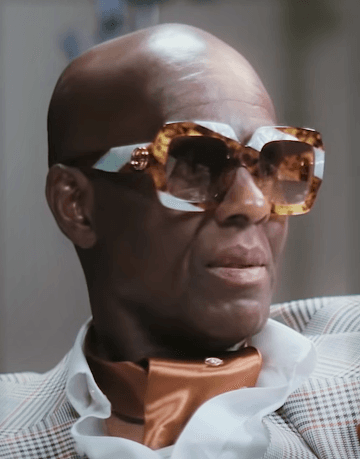
Designer Dapper Dan of Harlem.
Ashley Graham, CC BY 3.0, via Wikimedia Commons.

HARLEM COUTURE

Dapper Dan dressed the culture before fashion caught up.

From his 24-hour boutique on 125th Street in the 1980s, Dapper Dan remixed European luxury logos into custom pieces for hip-hop royalty and hustlers alike — inventing the logomania language luxury fashion later adopted wholesale. Decades after the houses shut him down, Gucci partnered with him on a Harlem atelier. The culture he tailored now sits front row.

Source: Dapper Dan of Harlem

TAILORING BLACK STYLE

Black dandyism went from resistance to the Met Gala.

From Frederick Douglass's deliberate portraiture to the zoot suits of the 1940s to André Leon Talley's capes, dressing sharply has been a Black American act of self-definition for two centuries. In 2025, the Metropolitan Museum's Costume Institute made it the Met Gala theme itself — "Superfine: Tailoring Black Style" — the fashion world's biggest night, built on this lineage.

Source: The Metropolitan Museum of Art

SNEAKER CULTURE

Air Jordan turned sneakers into culture and commerce.

When Nike signed rookie Michael Jordan in 1984 and released the Air Jordan 1 in 1985, shoes stopped being equipment. Sneaker culture — collecting, trading, queueing, reselling — grew out of Black basketball and hip-hop style into a global multibillion-dollar economy. The pair on your feet is probably downstream of that deal.

Source: Air Jordan — history

FOR US, BY US

FUBU proved the phrase was a business model.

In 1992, Daymond John and three friends started sewing hats in his mother's house in Hollis, Queens, and stitched four letters into fashion history: For Us, By Us. FUBU rode hip-hop to hundreds of millions in sales and put Black ownership on the label, not just the customer. John later took the lesson to television as an investor on Shark Tank.

Source: FUBU — history

LANGUAGE

American slang speaks with a Black accent.

"Cool." "Hip." "Bling." "Woke." For over a century, African American English has been the most productive engine of American slang — coined in Black communities, amplified through music, and absorbed into everyday speech, usually without credit. Linguists document AAVE as a rule-governed dialect whose innovations continuously reshape how all of America talks.

Source: Linguistic Society of America

THE SHOP

Barbershops and beauty salons are Black institutions.

Since the 1800s, the barbershop and the beauty salon have been among the most consistently Black-owned businesses in America — part economy, part forum, part sanctuary. Madam C.J. Walker and Annie Malone built empires on Black hair care; today the shop remains where community news, mentorship, and enterprise meet. Find yours in the directory.

Find Beauty & Wellness businesses

KEEP THE THREAD

Culture points to commerce.

Every story here connects to businesses working right now. Support the living version of this history — or add a story we are missing.

Next collectionLandmarks & Museums